How to lose weight? Or what to begin training with?
Oct 21, 2024
This 7-minute article will help you lose weight and start exercising the right way.
Hi, Oleksiy Kononov is in touch.
Many friends often ask me: how to lose weight? How to build muscle? What to begin training with?
Health and appearance are just as important a component of life as your career, money, and family.
The more I talk to friends from different professions and backgrounds, the more I understand: happiness is in the balance.
My training experience is about 30 years — gymnasts start early.
In this article, I'll share what I consider most important in the first steps toward an athletic body.
Start with What You Have
Being an idealist, you might spend a long time looking for the best program that will quickly and effortlessly lead you to an athletic body.
That's a trap. A marketing story.
It's great for advertisements. But it has nothing to do with the actual work.
So it's better to start as early as possible, with what you have. For example — right now.
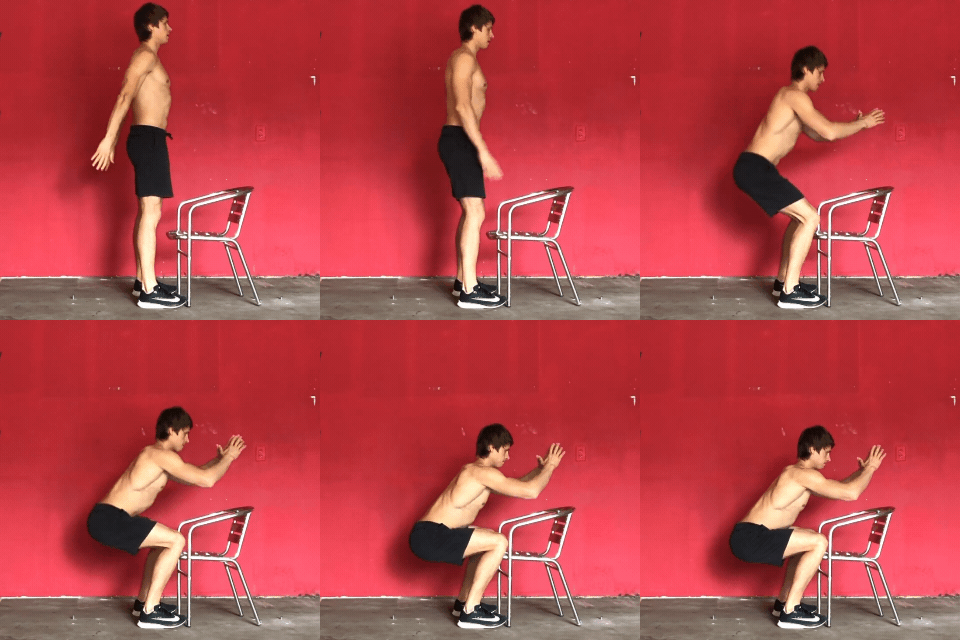
Take a break, stand up, and do 10 squats.
Done? Let's go.
If you accept that there are no freebies — that you have to put in the work — it becomes easier to start acting.
We often overestimate what we can get in a month of training, and greatly underestimate the result of a year of daily exercise.
You moved step by step in your profession, from simple to complex, overcoming laziness and loss of motivation. Working on your body will be no different.
Be patient — I'll explain what to work on and how.
What to Work On?
There are several options for setting a goal — I wrote about them here.
One of my favorites is physical training — what's called General Physical Training in sports circles.
This is the foundation of a cool and sustainable result.
Imagine yourself as the hero of a computer game. Playing every day, you upgrade your physical qualities and turn into a superhero.
The advantage of this goal: you kill three birds with one stone.
- You become superb functionally.
- You get a more attractive look.
- You win over laziness.
The main physical qualities you need to develop:
- Endurance
- Strength
- Flexibility
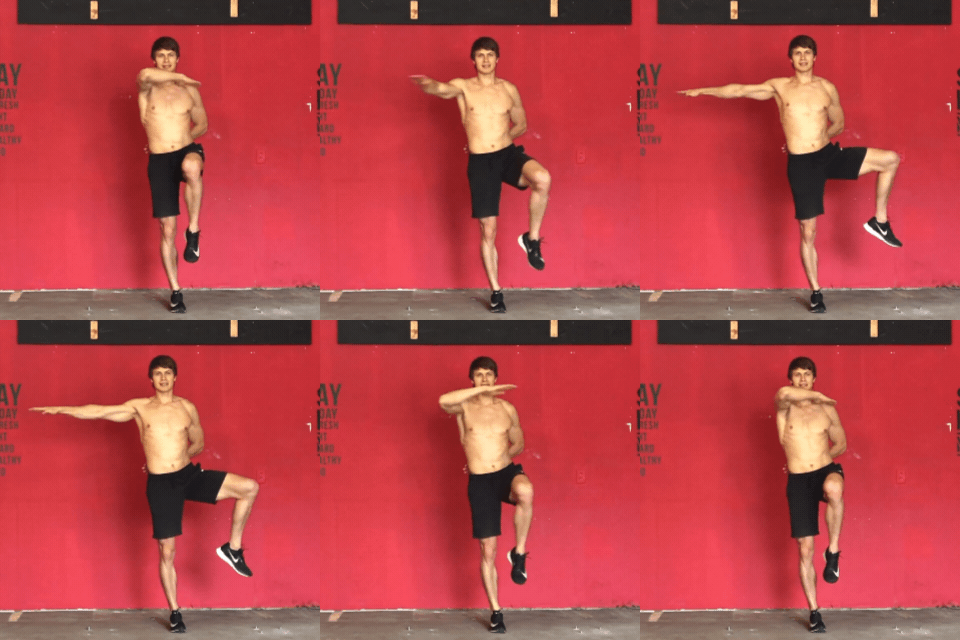
- Coordination
- Speed
- Balance — the ability to maintain equilibrium in unpredictable situations.
- Stabilization — the ability to compress your body and move as one solid unit.
You'll also need to develop psychological discipline — building a habit of daily exercise through consistency and enjoyment.
There is work to be done.
What Are We Changing and How?
I break the path to any goal into 3 stages: Preparatory, Basic, and Competitive. This article focuses on the Preparatory training cycle.
Preparatory training cycle:
- Goal: improve endurance, balance, and stabilization; reduce fat %; increase muscle mass %.
- Time per workout: 30–50 minutes.
- Duration: at least 4 weeks.
General Physical Training is a foundation for great results — I don't recommend rushing through it. At this stage, we "teach" the body to work more efficiently.
If you get out of breath climbing to the third floor, it's not safe to jump straight into mega-intense workouts. The challenge: fix that first.
Here's what changes and why.
The heart works as a pump. Even after the first training session, once it senses that regular loads have been launched, it starts to adapt — delivering larger portions of blood with oxygen and nutrients in each beat.
- How to train: walking, jogging, cycling, swimming, aerobics.
- Time: from 20 minutes, increasing dose each workout.
- Goal: train the heart to work more efficiently.
Arteries, veins, and capillaries — our transport system. Think of it like roads. If you put good cars on bad roads, they won't go faster. Feeling the load, the body starts repairing old roads and building new ones — expanding the capillary network. Oxygen, water, nutrients, and hormones all move faster. Metabolism accelerates.
- How to train: walking, jogging, cycling, swimming, aerobics.
- Time: from 20 minutes, increasing dose each workout.
- Goal: accelerate metabolic processes in the body.
"If you put good cars on bad roads, they won't go faster."
The lungs add extra "turbines" under load. Breathing rate can increase up to 15 times during training. We need to learn to breathe with the whole chest.
- How to train: walking, jogging, aerobics, outdoor team sports.
- Time: from 20 minutes, increasing dose each workout.
- Goal: improve the body's ability to consume and use oxygen.
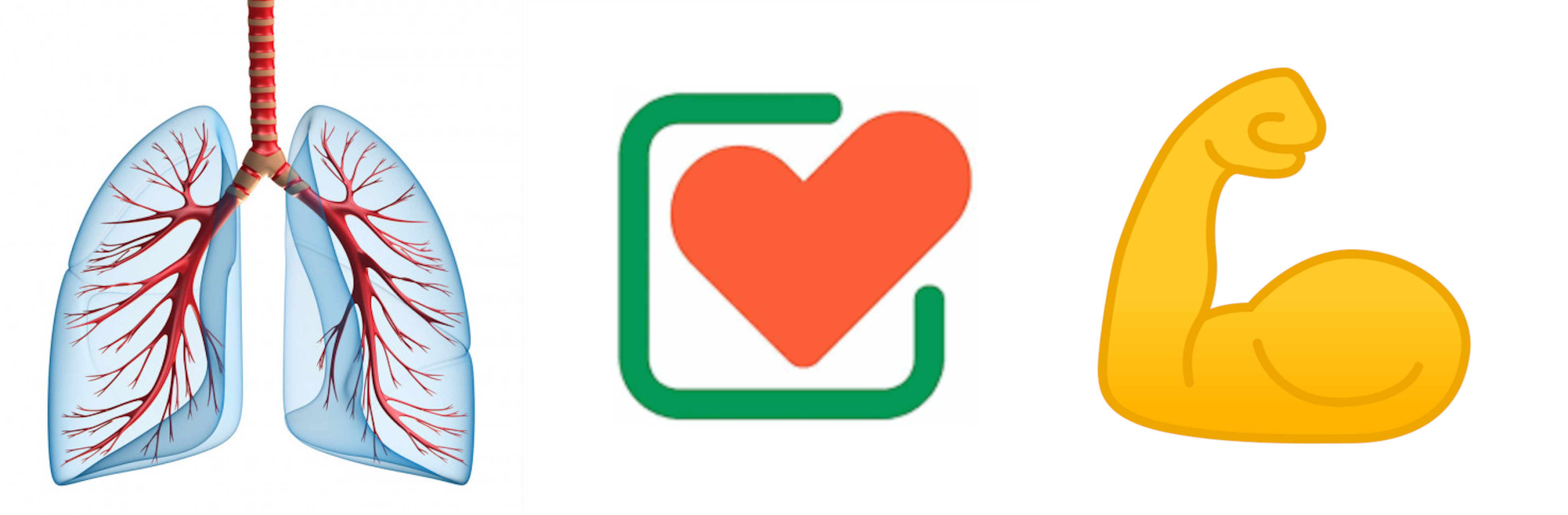
Muscles under load begin to create additional "factories" for energy production — mitochondria. When muscles don't work, the body shuts these factories down as unnecessary. When you train, it builds new ones.
This confirms the idea: the more you train, the more energy you gain.
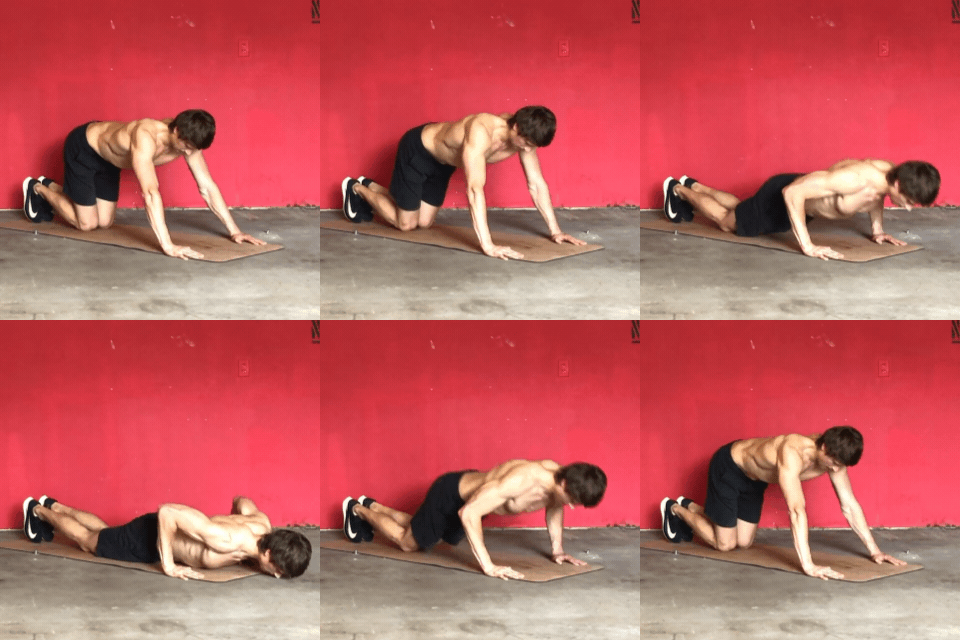
- How to train: strength exercises with bodyweight.
- Time: from 20 minutes, increasing dose each workout.
- Goal: improve the body's ability to generate energy; lose fat, gain muscle.
What Can You Throw Further: a Stone or a Condom Filled with Water?
Stabilization — learning to compress your body and become an exercise machine.
There is such a thing as a non-contact injury — when a sudden movement causes a pinched nerve, or a draft catches you wrong. Stabilization exercises strengthen the muscles at the center of the body, giving you more confidence in any movement.
- How to train: static exercises (plank variations).
- Time: from 30 seconds under load, increasing dose.
- Goal: protect yourself from injury and gain confidence.
Muscle imbalance and flexibility. Professional activity shapes and adjusts the body. If you sit for 8 hours a day, the front of your thigh stretches and the back shortens. Over time, this pulls on the pelvis, which connects to the spine, which changes your posture. Flexibility exercises correct these distortions and increase range of motion in the joints.
- How to train: stretching.
- Time: from 30 seconds under load, increasing dose.
- Goal: increase joint range of motion and protect against injury.
"If you want to change something in your life, change what you do every single day."
Building the Habit of Daily Exercise
It's vital to develop discipline. What I've learned: if you want to change something in your life, change what you do every single day.
A few secrets to strengthen your discipline:
- Plan — decide how many workouts you'll complete in four weeks. Make a checklist.
- Joker — define your minimum task. Whatever happens, do the minimum. Maintain the habit.
- Praise — celebrate yourself. Surround yourself with people who encourage you. Attach pleasure to training.
- Environment — surround yourself with like-minded people who won't let you go astray.
- Commitment — hire a coach, buy a training program, make a bet, post publicly that you'll train every day for 15 minutes minimum.
Discipline builds a habit. The habit builds quantity. Quantity builds quality. Health. An athletic body. Energy.
Good physical shape is just as important as money, career, and family. Don't skip workouts. You have everything you need to get started.
Now go do 10 more squats.
If you liked this article, please share it. And remember: you can always do more.
The best way to turn this article into action: start the BaseBuild Challenge — a complete foundational program that follows the exact Preparatory cycle described here. Or if you want to know exactly where to focus first, take the Fitness Checkup.
FAQ
What is General Physical Training and why start there?
General Physical Training (GPT) is the foundation of any athletic development — it builds endurance, strength, flexibility, coordination, speed, balance, and stabilization all at once. Starting here means you develop the body's capacity to handle more specialized training later, while also changing your appearance and defeating laziness in one step.
How many times a week should a beginner train?
For the preparatory cycle, consistency matters more than frequency. Even 3–4 sessions per week of 30–50 minutes is enough to start building all the systems described. The goal is to establish the habit first, not to exhaust yourself.
Why does training give you more energy instead of draining you?
Because muscles under regular load create more mitochondria — the structures that produce energy from fatty acids. The more you train, the more of these energy factories you build. More factories means more energy, not less.
What is a "minimum task" and why does it matter?
A minimum task is the smallest possible workout you'd still count as showing up — even just 10–15 minutes of movement. On hard days, hitting the minimum keeps the habit alive. Habits are built by consistency, not by intensity. The brain needs repetition, not perfection.
Keep Reading
- How to Set a Goal in Training — choose the right target before building your program
- The Best Training Algorithm — how to structure every session from warm-up to recovery
- Continuous Sequence — why showing up daily matters more than any single hard session
- 5 Rules an Athlete Should Know and Follow — the lifestyle habits that support every training program
- Kononov Healthy Concept — the 3-level framework for lifelong physical development