How to Tape Your Knee: A Step-by-Step Guide
Oct 20, 2024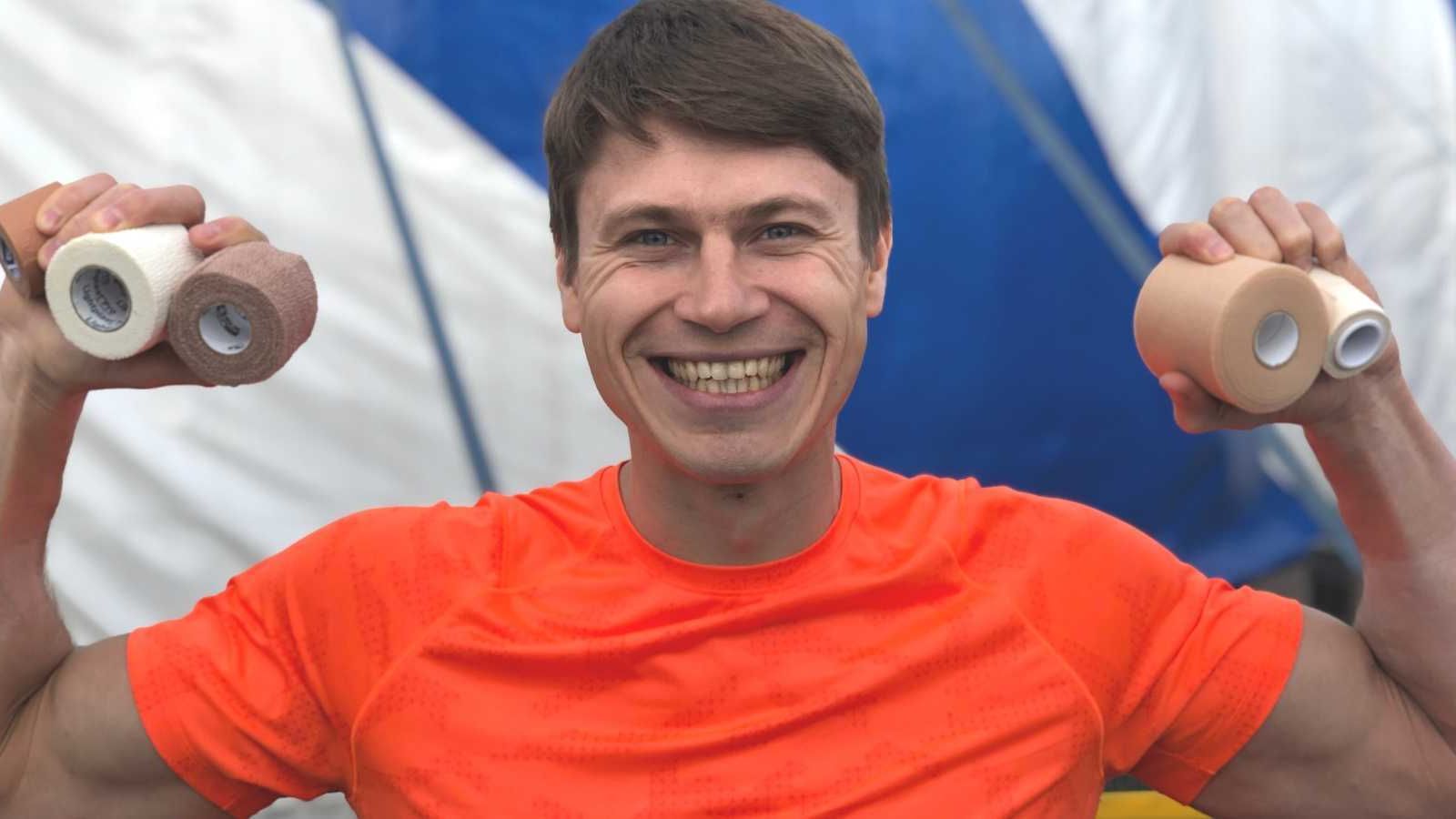
A 5-minute article about my experience using tape in training and performances.
Hi, Oleksiy Kononov here.
This article continues the story of my knee recovery after tearing my anterior cruciate ligament (ACL).
It's the third article in the series. You can read about the injury itself here, and see what I do on stage here.
Today I'll focus on taping. I'll answer:
- What is taping, and how do gymnasts use it?
- Is it worth using?
- Why didn't I use it before?
- How do you apply it?
What Is Taping?
In sports, taping is mostly an extra layer of joint support using special adhesive strips (tape), which help muscles and ligaments handle extreme loads.
It can also relieve pain and is sometimes used for muscle imbalances.
Tape, plasters, and elastic bandages are standard items in any gymnast's bag.
I've used some version of these since childhood — mostly simple wraps for hands, ankles, and fingers.
Is It Worth Using?
I learned advanced taping techniques in 2011, while working as a catcher in Cirque du Soleil's Alegria.
A more experienced colleague pointed out that our bodies don't experience normal loads — they experience overloads, similar to astronauts entering orbit.
That needs to be respected.
I doubt knees were designed to hang upside down at 12 meters and catch people weighing 65 kilograms.
Tape, like part of an astronaut's protective suit, helps relieve a few percent of the load in high-stress moments — and those few percent can matter at a critical moment.
I followed the advice and kept taping consistently.
Still, there were two annoying downsides:
- It took at least 15 minutes each time, twice a day, since there are two shows daily.
- Removing the tape meant losing leg hair along with it — unbearably painful. Ladies, I don't envy you at all.
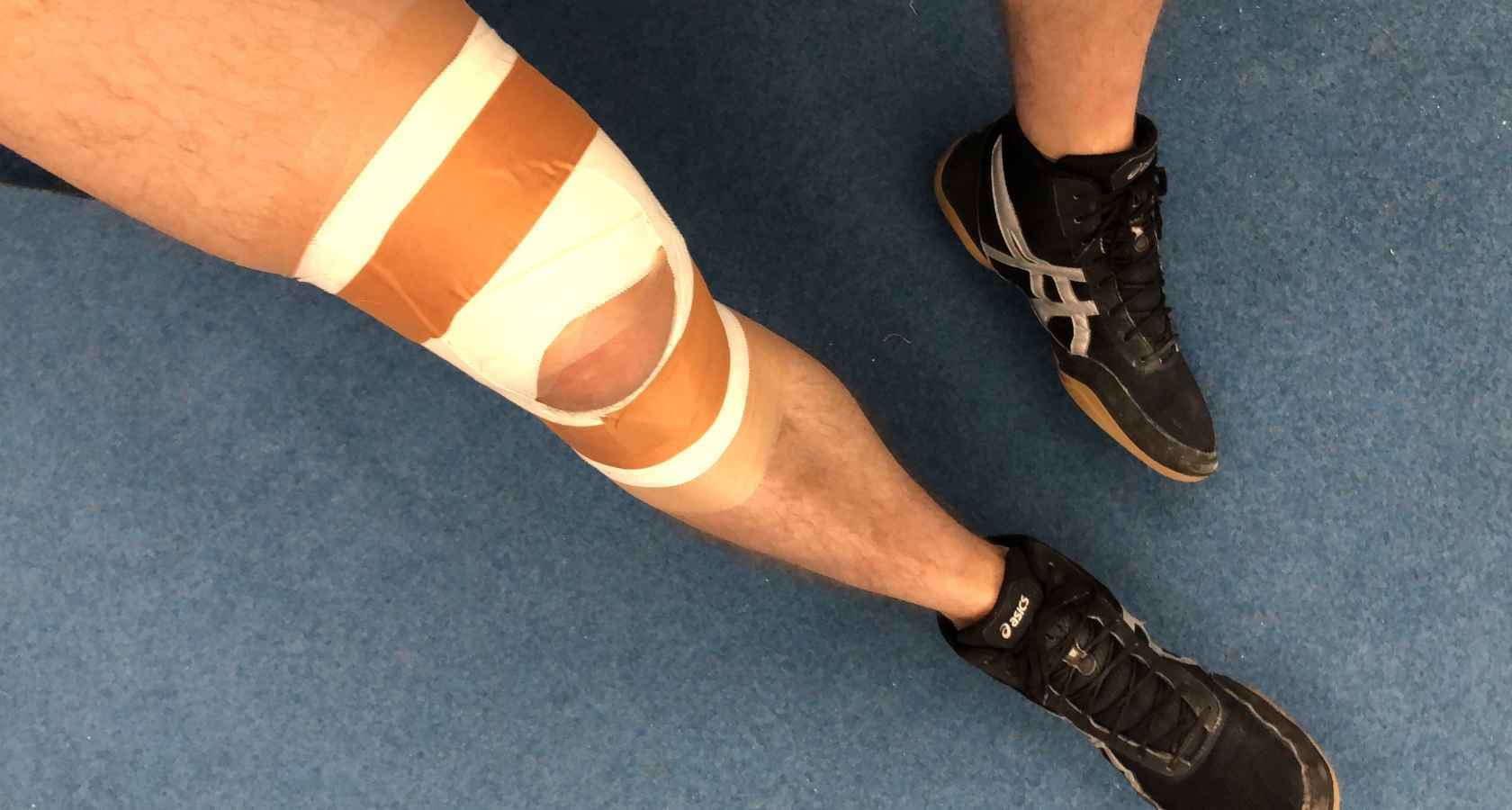
Video Instruction
5 Steps to Tape Your Knee, by oleksiy_kononov
Why Didn't I Use It Before?
I returned to work as a catcher in 2018, after a 4-year break, and stopped taping my legs at that point.
I couldn't find the same bandages I'd used before in the physio department, didn't want to get used to new ones, and figured I was tough enough to skip it.
I thought I was a big shot. I was wrong.
I learned a valuable lesson. My technique let me catch a difficult trick — but my knee paid the price.
That setback is part of why I eventually built the Healthy Knee Challenge — to help people avoid repeating the same mistakes I made.
How to Tape the Knee
You need a basic understanding of anatomy to tape the right area effectively.
You have to know where the muscles and ligaments you're trying to support actually attach.
The body is smart, and I believe everything in it is built thoughtfully by default — so I simply use tape to duplicate the existing muscle lines, tuning them and adding extra strength.
If you don't have that knowledge yet, find a specialist.
If you'd like to learn the technique yourself, check out the Healthy Knee Challenge.
Summary
I learned my lesson and started taping both legs.
Now I spend 30 minutes a day on it, gladly, even though it means shaving my legs.
My knees will thank me for it.
That said, I don't recommend taping just for show — it's expensive and won't make you stronger on its own.
As a professional athlete working under peak loads, tape is a tool that belongs in your kit.
Use it, and get tuned.
#kononov_backtotheshow #oleksiykononov #cdslife #kononov_team
Wondering if surgery is the right call for a torn ligament? Read next: ACL Tear: Surgery or Physiotherapy? What the Evidence Shows
If your knee needs real structure, not just tape, take a look at the Healthy Knee Challenge.
FAQ
What is athletic taping used for?
Taping adds extra support to a joint using adhesive strips, helping muscles and ligaments handle extreme loads. It can also relieve pain and help with muscle imbalances.
Does taping make you stronger?
No. Taping doesn't build strength on its own. It supports the joint and reduces some of the load during high-stress movements, but the real strength still has to come from training.
Do you need training to tape a knee correctly?
Yes, a basic understanding of anatomy is needed to know where the muscles and ligaments attach, so the tape supports the right lines. Without that knowledge, it's best to find a specialist.
What happens if you skip taping after a knee injury?
Skipping tape after returning to high-load movements can mean less support exactly when it's needed most, which is what led to a setback in this case.