ACL Tear: Surgery or Physiotherapy? What the Evidence Shows
Oct 20, 2024
A 7-minute article on what to do if you've torn your knee ligaments.
Every athlete knows that even a minor injury can end a career.
Many are willing to push through pain and discomfort, but when an injury limits movement, it brings a real shock that can change a future career and quality of life.
The common belief is: “If it's broken, go under the knife.”
But that decision is often far from rewarding, or even rational.
Fortunately, there are sports doctors and scientists in the world constantly researching new rehabilitation methods.
This article is about exactly that.
This is the final article in my knee injury series. You can read about how the injury happened in How I Tore My ACL and Recovered Without Surgery.
What Convinced Me Not to Go Under the Knife
Experts have long claimed that surgery was the only way to recover from a torn ligament.
That belief is deeply rooted in standard practice, and most healthcare systems don't promote information about alternatives.
Patients often have no idea other options exist.
New research has shown there are other paths — rehabilitation through physiotherapy.
Based on findings from Dr. Kieran Richardson, a researcher from Australia, there are many documented cases of athletes returning to sport without ever going under the knife.
Great News for Every Athlete
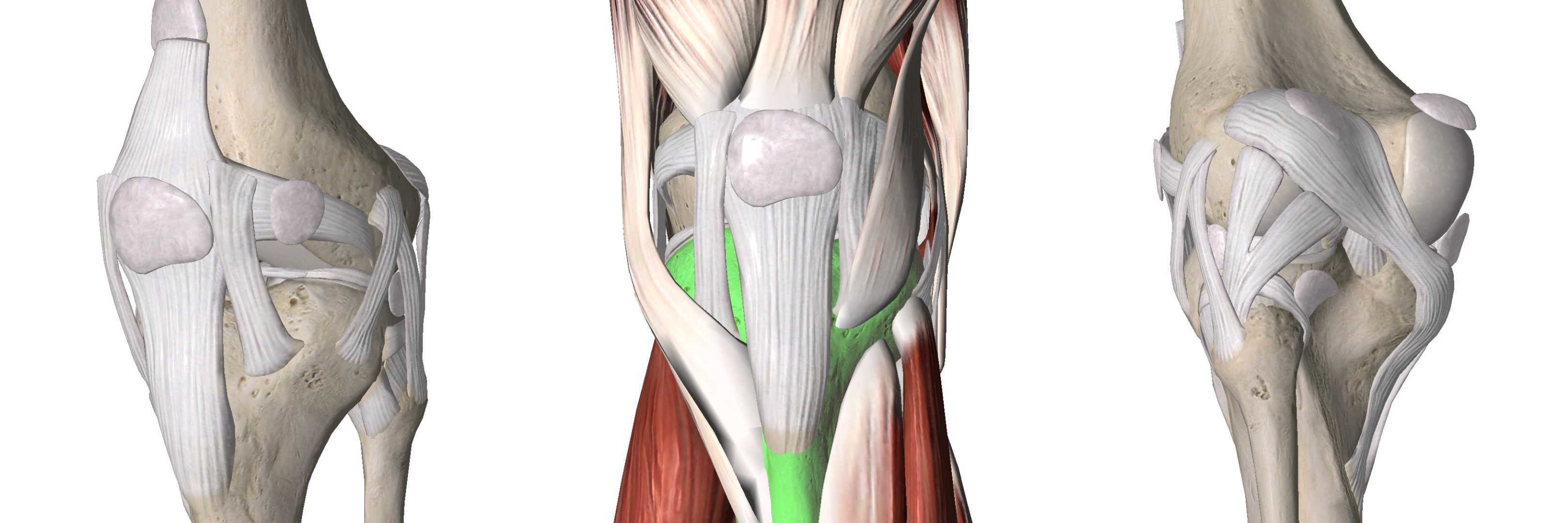
A knee has 4 main ligaments at the deepest level: two cruciate ligaments (which keep the knee from moving forward and backward) and two lateral ligaments (which keep it from moving side to side).
It's important to understand that a torn ligament can't regenerate on its own.
Its integrity can't be restored naturally.
Surgery usually replaces it with a graft, often taken from the gluteal muscle, to stabilize the joint.
The advantage of surgery is that the ligament is physically restored to its place.
The disadvantage is that mobility is often limited afterward — the knee may not bend or straighten the way it used to.
It's also worth knowing that beyond the 4 main ligaments, there are smaller ligaments, the joint capsule, and the surrounding muscles.
They all work as a team to stabilize the knee.
That understanding is what supported my decision to recover without surgery, and it later became the foundation of the Healthy Knee Challenge.
Based on my experience working with Cirque du Soleil physiotherapists, here's roughly how I see the stabilization split:
- The 4 main ligaments provide about 30% of stabilization.
- The smaller ligaments and joint capsule provide another 30%.
- The surrounding muscles provide the remaining 40%.
That means losing one main ligament is, at most, a 7% loss in stabilizing function — and that gap can be made up by strengthening the muscles around the joint.
In this article, I found research showing that patients who had surgery sometimes had worse outcomes than patients who didn't.
Real Cases: Recovery Without Surgery
It's hard to believe that you can fully recover from a torn cruciate ligament without surgery, but the documented cases are real.
Many NBA, NFL, and MLB players have already proven that non-surgical recovery is possible at the highest level of sport.
- An English Premier League footballer returned to play without surgery just 8 weeks after a complete ACL tear, with no discomfort in the game (Weiler et al., 2015; Weiler, 2016).
- DeJuan Blair, a former San Antonio Spurs player, played multiple NBA seasons without an anterior cruciate ligament at all.
- And I can add my own name to that list — I recovered in 8 weeks with a properly built program of exercises and physiotherapy.
I met the physical training coach of FC Zaria recently and told him my story.
He said: “Now you should always stay fit and in good shape.” Good advice.
My Conclusion
Non-surgical rehabilitation is possible, and it's already being used actively in professional sport.
A well-built program of exercises and physiotherapy can develop the muscular frame and improve coordination enough to compensate for a missing ligament.
You can come out of it stronger than you were before the injury.
That outcome can lead to a full, successful return to competition and everyday life.
It's important to take a thoughtful approach when deciding how to recover, and to weigh the pros and cons of surgery carefully.
Talk to experienced sports doctors, map out your path, and commit to it with confidence.
Yes, you'll have to push through pain and fear during rehab.
But the result is worth it — I've proven that in practice.
I believe that in today's world, it's worth paying close attention to physical-exercise-based rehabilitation, for both athletes and everyday people.
We can always do better, and our body is our best ally in getting there.
Want to see how the full recovery played out? Check out the rest of the series: Knee Rehabilitation After a Torn Ligament: 4-Phase Recovery Plan and How to Tape Your Knee: A Step-by-Step Guide
If you're facing the same decision I faced, the program built from this exact recovery process is here: Healthy Knee Challenge.
FAQ
Can you recover from a torn cruciate ligament without surgery?
Yes. Documented cases from professional sports, including the NBA, NFL, EPL, and this personal case, show non-surgical recovery is possible with the right physiotherapy program.
What's the disadvantage of ACL surgery?
Surgery restores the ligament physically, but mobility is often limited afterward, and the knee may not bend or straighten the same way it used to.
How much do muscles really contribute to knee stability?
Based on this experience working with Cirque du Soleil physiotherapists, the surrounding muscles may contribute around 40% of overall knee stabilization, alongside the main ligaments and joint capsule.
Who should you talk to before deciding on surgery?
Experienced sports doctors who can assess the specific injury and walk through both the surgical and non-surgical paths before a decision is made.