Knee Rehabilitation After a Torn Ligament: 4-Phase Recovery Plan
Oct 20, 2024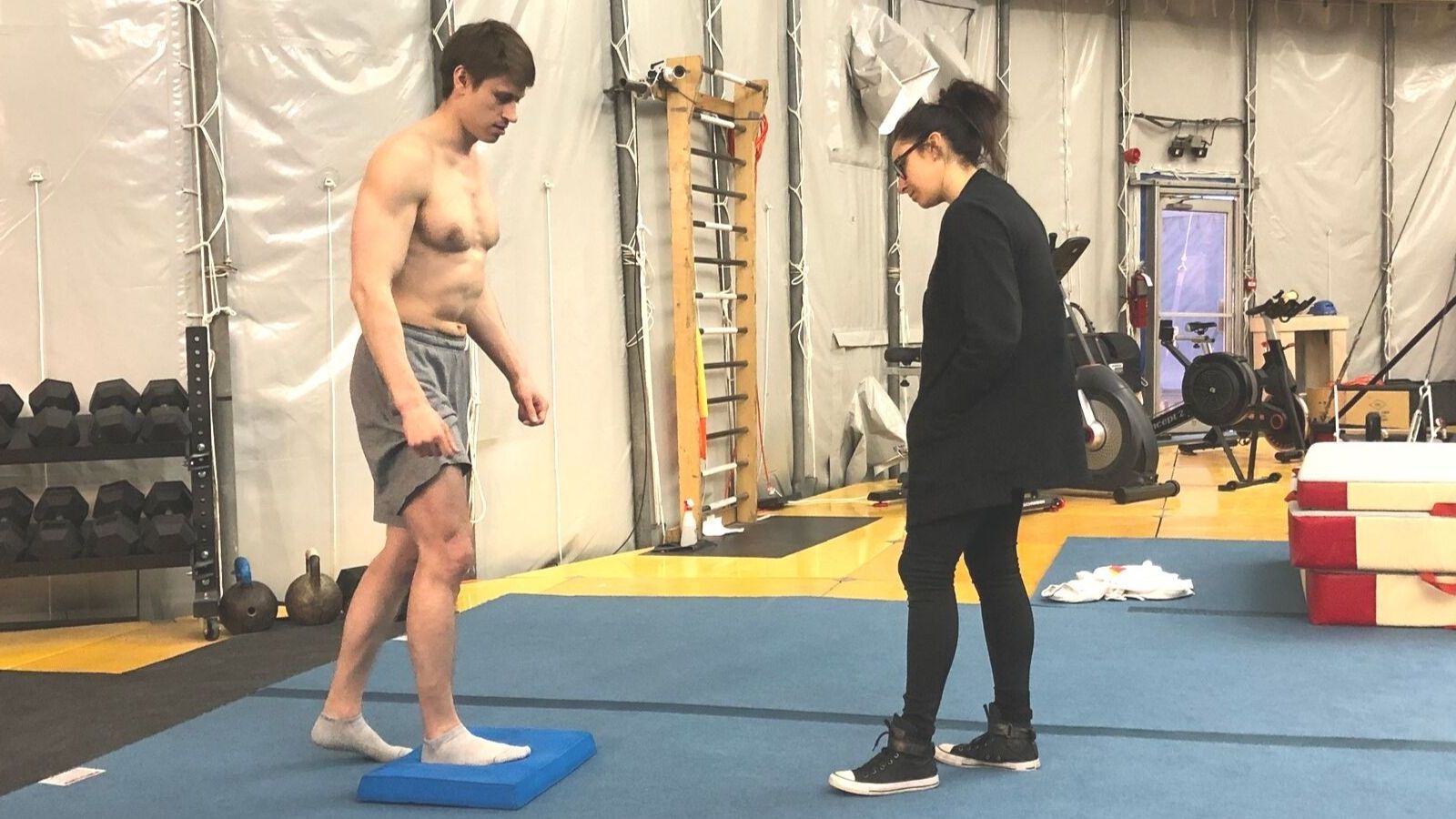
A 7-minute article about my experience recovering from a cruciate ligament tear, without surgery.
I See My Reflection in the Mirror, Fully Equipped and Determined
If you follow me, you probably know about the knee injury I suffered 4 months ago: a complete rupture of the anterior cruciate ligament.
You can read more about it here.
I decided to document my recovery process on the blog, as a case study, because I believe it will be useful to you.
I'm working through rehab in three areas: physical recovery, psychological recovery, and nutrition.
This is the second article in the series. It covers physical recovery: what exercises I did, why I did them, and the results I got.
The goal: get back to work. You can see what I do on stage here.
The tasks:
- Increase muscle mass.
- Improve intramuscular and intermuscular coordination.
- Refine performance technique.
I split the whole rehabilitation process into 4 cycles.
Cycle 1: Panic
This stage can be summed up in one word: panic.
When an injury happens, the belief that you're a superhero — which you need for daily performances on the Cirque du Soleil stage — collapses.
There was no intense pain, but it was clear the “machine” had broken down.
I couldn't fully straighten or bend the leg, and it hurt to put weight on it.
I started asking: is it possible to recover without surgery?
And I began looking for proof of that in my first movements and exercises.
Goals and dreams sit behind a fence of fears and doubts.
I completely rejected crutches, so my first training session began almost right after the injury.
Getting into a taxi was a small challenge that helped me manage a 20-minute walk to the theater the next day.
That walk became a daily ritual for the next month.
Walking: 30 minutes.
I added cycling a week later.
Pedaling wasn't very comfortable — my knee clicked from time to time — but there was enough strength in my leg to give me hope.
Cycling: 15–30 minutes a day, low intensity.
While waiting for the MRI results, we focused on one of physiotherapist Nathalie's goals: keeping the muscles of the injured leg active (muscle activation).
On the third day after the injury, we started passive exercises — the physiotherapist acts as a resistance source at different angles, and I fight against it while lying down, using only the necessary muscles.
Passive exercises: 3 times a week, 30 minutes, plus ice every 2–3 hours for 20 minutes throughout the week.
Result of this cycle: I restored basic walking, kept my physical form, and regained self-confidence.
Cycle 2: Let's Try to Move
Once the diagnosis was clear and the doctor confirmed recovery without surgery was possible, I moved on to training for balance, stabilization, and strength endurance.
This is also the foundation I later built into the early weeks of the Healthy Knee Challenge.
Joy ahead, pain behind.
Balance and stabilization exercises are physically simple but coordination-heavy.
Examples: standing on one leg while being shaken, stepping up from awkward positions, or throwing and catching a ball while balancing on one foot on a soft surface.
The purpose: rebuild and strengthen the connection between brain and muscles.
Here's how it works in real life — imagine coming home from a party at night, stepping outside in the rain, in a good mood, and then slipping on a wet step.
If the brain and muscles are in sync, your body adjusts instantly and you keep your balance.
If not, you get hurt.
In my case, to prepare for the strength phase, all my muscles needed to work together, in the right place, at the right time.
Balance and stabilization exercises: 3 exercises x 3 sets of 12–15 reps. See the exercises here.
I also added strength endurance exercises: classic squats and lunges with bodyweight, plus exercises focused on the knee.
The goal was to prepare my legs for the strength phase and improve technique.
Strength endurance exercises: 2 exercises x 3 sets of 12–15 reps. Find these exercises here.
Result of this cycle: I restored basic functions — walking, squatting, light running — and prepared myself to start building muscle mass.
Cycle 3: Time to Go on the Attack
Once basic function was restored and my confidence was back, I moved on to building muscle mass with specialized training.
For the strength cycle, I used two basic barbell squat variations and a deadlift at a relatively high intensity for me (70–80% of my one-rep max — read more about what that means here).
Building muscle mass was one of my most important goals, and these exercises fit perfectly.
When you press a heavy barbell on the last reps, your whole body fights the weight and uses every resource it has.
After a workout like that, anabolic hormone levels in the blood spike, which supports muscle growth — exactly what I needed.
I also added one isolated exercise, lying calf curls on a machine, plus dumbbell lunges to increase overall training volume.
The strength block: 4 exercises, 3 sets of 8–10 reps, at 70–80% of 1RM, with 1-minute rest between sets.
Alongside this, I did specialized training: exercises shaped around the “chair” position used in catching, aimed at restoring specific skills and correcting technique.
At first, it was scary.
My brain remembered the pain and kept flashing images of failure whenever I got into the chair position.
I'll cover how I worked through that fear in the next article, on psychological recovery.
For now, I'll just say I went back to the basics — relearning how to swing, lean back, and catch.
This part is specific to the small world of catchers, but curious readers can see the exercises here.
Specialized training: 3 exercises, 3–4 sets.
Result of this cycle: I gained muscle mass (measured weekly) and restored my basic catching skills.
Cycle 4: Back on Stage
My palms sweat again.
The music plays as the net is pulled tight, and a massive swirling cloud of magnesia rises into the air.
The tension is real.
I see my reflection in the mirror, fully equipped and determined — and then, for a moment, time stops.
At a height of 12 meters, weightless, in a moment where time seems to freeze, my hands rest on my partner's forearms.
I feel solid support in my legs, and happiness.
My chest rises with each breath, the suit presses against my skin, and the moment I've waited eight long weeks for finally arrives.
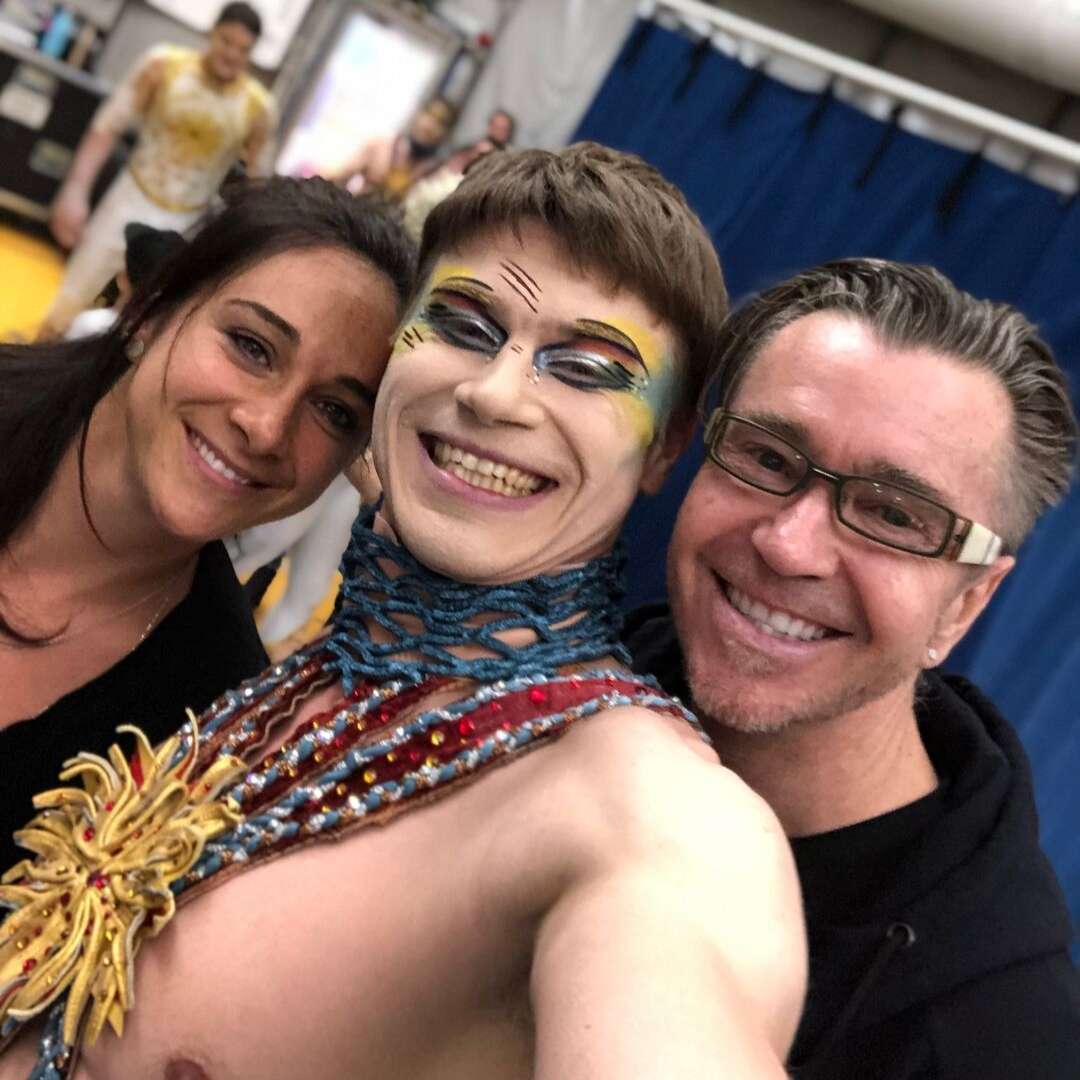
I catch — and I'm met with a wave of applause.
I did it. I'm back on stage.
Wherever you are, and no matter how life beats you down, remember: there is always a way out.
Believe in yourself, lean on sports discipline, and go all in.
And remember — you can always do more.
If this article was useful for you, start acting on it using my experience.
And if you know friends who could benefit, share it — we'll both be grateful.
#kononov_backtotheshow #oleksiykononov #cdslife #kononov_team
Continue reading the series: How to Tape Your Knee: A Step-by-Step Guide
If you want the full step-by-step version of this recovery plan, it's all laid out in the Healthy Knee Challenge.
FAQ
What are the main phases of knee ligament rehab?
In this case, recovery moved through four cycles: an initial panic phase focused on activating the muscles, a movement phase focused on balance and stabilization, a strength phase focused on building muscle mass, and a final phase returning to full performance.
How soon after a knee injury can you start moving?
Walking started almost immediately, without crutches, and cycling was added about a week later at low intensity, alongside passive muscle activation exercises guided by a physiotherapist.
Why focus on balance and stabilization before strength training?
Balance and stabilization rebuild the connection between the brain and the muscles. Without that foundation, strength training alone won't translate into a stable, reliable knee.
How long did the full recovery take?
The full return to performing on stage took about 8 weeks, moving through all four rehab cycles.