Why Your Body Compensates — And How to Fix It Before It Breaks You
Apr 09, 2026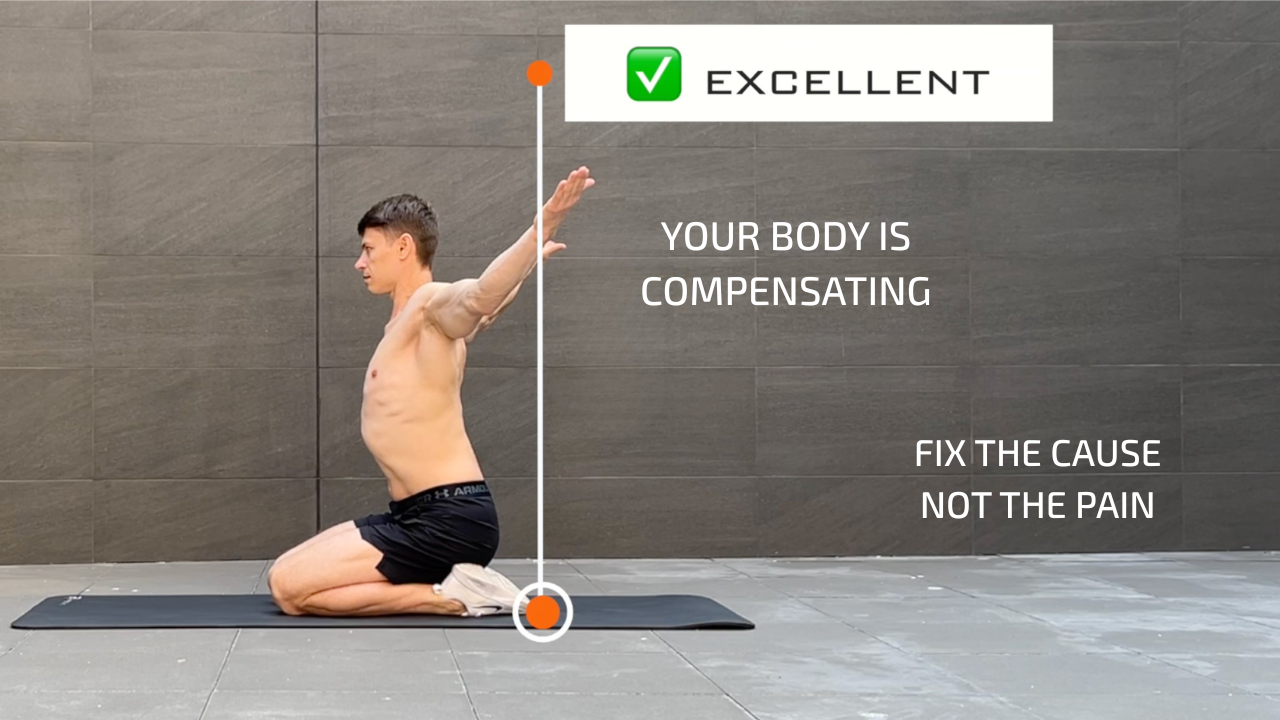
Pain Is Not the Problem. Pain Is the Message.
I have been on my hands for more than 30 years.
I performed more than 2,000 shows.
I trained more than 20,000 people.
And still — my body broke.
Not because of one big injury. Because of small mistakes repeated every day.
This is what most people don't understand about pain: pain is not the problem. Pain is the message.
And if you ignore it — your body will find another way to speak.
Let me show you how it works.
Movement After Injury — The Hidden Trap
When you feel pain, your body becomes smart. It protects you.
If your right leg hurts — you shift weight to the left. If your back hurts — you move differently.
At the beginning, this is good. This is survival.
But here is the problem: if you keep living like this, this temporary solution becomes your new normal.
And this is where everything starts to break.
Muscle Imbalance — The Real Enemy
When you compensate for too long, your body creates imbalance.
Some muscles become tight and short. Some become weak and long.
This changes your joint angles, your range of motion, your movement patterns.
You don't move like before anymore — but you don't notice it. Until one day, pain becomes too loud.
And then people say: "I have a pinched nerve." "I slept wrong." "The weather changed."
No. You built this problem step by step.
My Story — When My Body Said Stop
After my career in Cirque du Soleil, I made a big mistake. I stopped moving. And I started sitting.
Long hours at the computer. No transition. No preparation.
At first — nothing happened. I felt normal. But slowly, my body changed.
The muscles in the front of my body became shorter — especially the hip flexors and psoas. When I stood up, I had a small angle in my hips. But I didn't feel it.
I was walking like this for months. Then one day — pain came. Lower back pain. Glutes tight like a rock. Numbness in my leg. I couldn't walk more than 10 minutes.
That moment gave me fear. And fear is useful — because fear forces you to pay attention.
The Real Problem — Alignment and Energy
Bones don't get tired. Muscles do.
If your body is aligned — like a well-built structure — you can stay in position with much less effort.
If you have angles in your joints, your muscles must work all the time to hold you. That means more fatigue, more tension, more overload. Every day. Until your body says — enough.
Rehabilitation Is Not Sexy — But It Works
Recovery is boring. There is no magic. No hack.
Only precise, controlled, repetitive work. Like building a watch — millimeter by millimeter.
Step 1 — Fitness Evaluation First
Most people skip this. Big mistake.
If you don't know what is wrong, you cannot fix it.
You need to understand which joints lost mobility, which muscles are tight, which muscles are weak. Without this — you are guessing. And guessing creates more problems.
Step 2 — Restore the System
There are three things you need, in this order:
Mobility — to restore range of motion.
Activation — to wake up weak muscles.
Stability — to control position.
Not random exercises. A system.
The Back Mobility Challenge follows exactly this order — restoring the range of motion your back lost, then progressively building the strength to hold it.
Step 3 — Go Slow and Stay Precise
This is where people fail. They want fast results. But your body doesn't work like this.
You need controlled movement, small amplitude, and high precision.
Even 1 centimeter of improvement can reduce pain — but only if it's done right.
My Recovery Process
I worked step by step.
First — release tight muscles: front body, psoas, quadriceps. Then — relax overworked muscles: lower back, glutes. Then — activate them again.
It took months. From strong pain to manageable. From fear to control.
And even today — I still manage it. If I skip mobility, pain comes back immediately. Now I understand the cause. And this changes everything.
The Biggest Mistake People Make
They wait until pain becomes strong. Then they try to fix it.
Instead — check your body before it breaks. Like a medical checkup. After 30, this is not optional. Your body will change. The only question is: will you control it, or will it control you?
Final Thought
Your body is always adapting. If you train it — it becomes stronger. If you ignore it — it becomes weaker.
Every day you are choosing one direction.
Pain is not your enemy. Pain is your coach. Listen early. Or pay later.
I Believe in You. Just Do It 💪 — Oleksii Kononov
FAQ
Why does compensation after injury eventually cause new injuries?
Because compensation redistributes load to structures not designed for it. When one area is protected, the body shifts work to adjacent muscles and joints — often the opposite side. Over months, the compensating areas accumulate overuse stress while the protected area stays underused and weakens.
What is the connection between hip flexors and lower back pain?
The hip flexors (especially the psoas) attach directly to the lumbar vertebrae. When they shorten from prolonged sitting, they pull the pelvis forward into anterior tilt, which increases the curve in the lower back and compresses the lumbar facet joints.
What's the correct order for rehabilitation?
Mobility first — restore the range of motion that has been lost. Then activation — wake up the muscles that stopped firing due to pain inhibition or disuse. Then stability — teach the muscles to control position under load.
How do you know if you need a coach or physiotherapist rather than doing rehabilitation alone?
If the pain is chronic (more than 4–6 weeks), if self-treatment hasn't produced noticeable improvement, if the pain is spreading or changing location, or if you notice that your movement patterns have visibly changed — seek professional help.
Keep Reading
- Low Back Pain: What to Do? — the full recovery framework including the psychological side
- Core Muscles and Low Back Pain — why core weakness creates the pain trap
- Why You Should NOT Do Rehabilitation Alone — when to stop guessing and get proper help
- Why People Get Injured (And How to Prevent It) — catching problems before they become injuries
- The Back Mobility Vitamin — the daily habit that prevents this from happening again