How to Do a Handstand?
Oct 21, 2024
A step-by-step guide in 7 minutes to help you do a perfectly good handstand.
A handstand is getting more viral every day.
You see people holding a handstand on a mountain, in a gym, or on a playground.
I appreciate those who can control their bodies.
But I get upset when someone promises to get you into a handstand in 5 minutes.
I'm a gymnast and Cirque du Soleil performer who has spent most of his life on handstands.
My sports career launched at age 4.
Since then, training has been filled with sweat, discipline, and a lot of result-advancing work.
Now I can hold a handstand with the same confidence as standing on my feet.
This article won't promise you a handstand by tomorrow.
But it will give you a heap of useful information and working tools that will ensure a safe journey and reduce many fears.
Base: Build the Foundation First
Before working on a handstand, you need to build a strong muscular base.
We learned to hold our heads first, then sit, crawl, then stand.
Each stage took months of "training" before we were ready for the next one.
I use the same approach in my training: from simple to complex.
Any gymnastics element involves all muscles.
To keep it simple, here are three parts of the body that deserve your attention most:
Core and Abdominal Muscles
Any movement starts from the abdominal muscles.
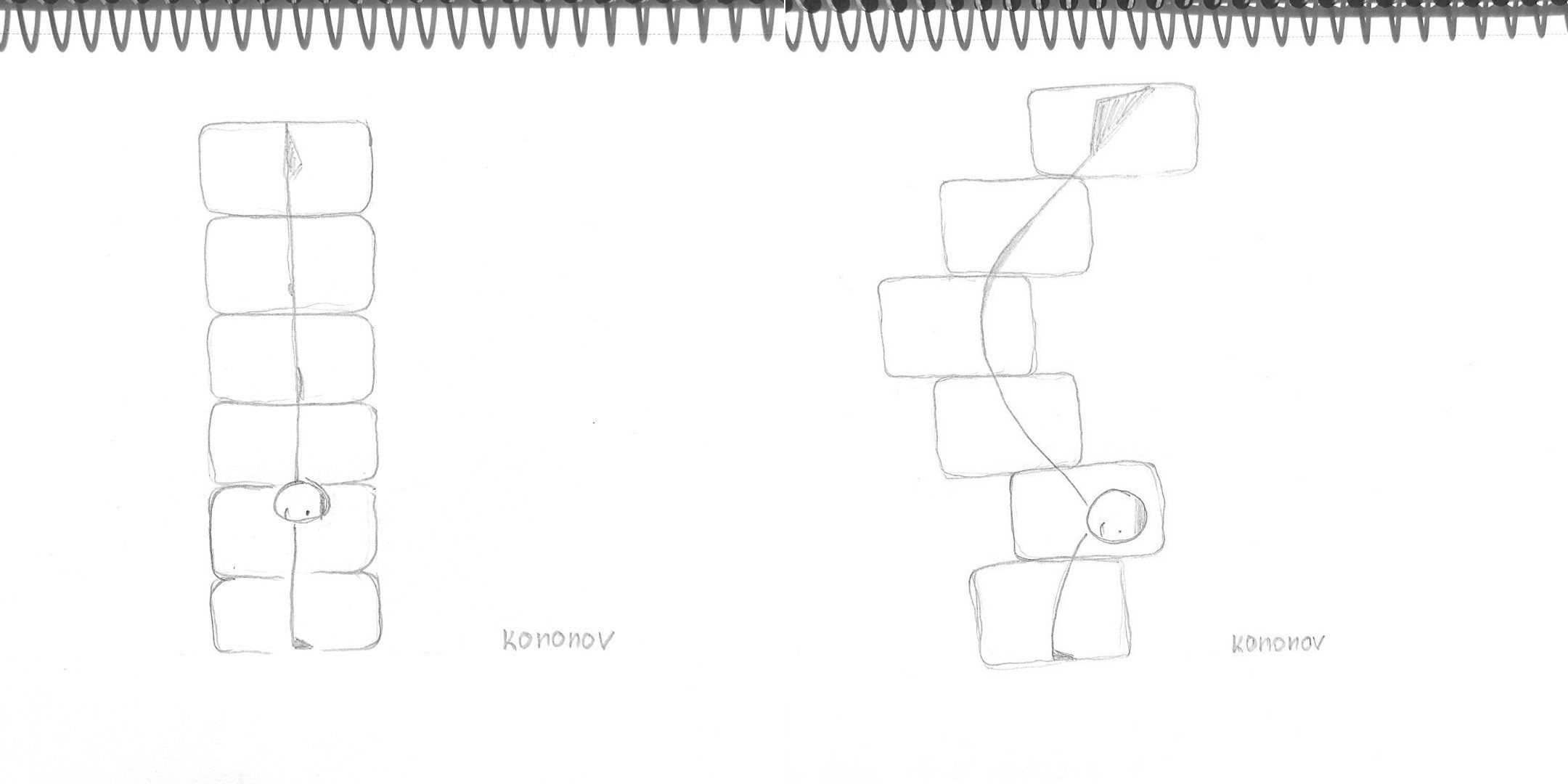
Like a plane that needs all doors closed before flight, you need your core tensed before any action — otherwise you fall apart.
The rectus abdominis is the mediator between the pelvis and the chest.
If this connection is strong enough, it prevents your heels from dropping behind your head.
That makes balancing much easier.
The back extensor muscles, which run along the spine, are responsible for the vertical position of the body.
Viewed from the side, the core and back extensors are like the support pillars of a bridge.
Remove one and the whole structure collapses.
Before going upside down, strengthen your core and back extensors.
Find exercises to help here.
Want to understand how core connects everything in a handstand? Read: How to Use Core for Handstand Balance.
Shoulders
Get ready for your shoulders to work hard from the very beginning.
A great part of the load is on them.
Your hands will catch small deviations from vertical — and the shoulders will do the work to correct.
Just as the glutes are responsible for balance when you're on your feet, the shoulders are responsible for balance when you're on your hands.
There are large shoulder muscles on the surface — the deltoids. They help you settle into your stance.
There are smaller muscles hidden deeper — the rotators. They help with fine balancing.
Both need to be prepared before getting into a handstand.
Exercises to help with this can be found here.
The shoulder joint also needs to be flexible for a technical handstand.
Test yourself: lie on your back, put your arms straight behind your head, and try to touch the floor with the outside of your palms without lifting your lower back.
If you can — that position is your ideal handstand line.
If there's an angle in the shoulders, you'll have to arch your lower back to catch balance, which risks injury.
See the test here.
Wrists
Your wrists are the first to react to deviations from vertical.
They help if you're being pulled toward your head.
But don't count on your hands alone if your toes start to fall — your fingers point to one side for that.
To hold a handstand, the center of gravity of your body must be above the middle of the hand.
I weigh 80 kilos — that's a meaningful load.
If you've been active on your hands from an early age, there won't be many problems.
If you're new to gymnastics, strengthen your wrists well before going upside down.
Details: Secrets That Speed Up the Process
When the base is ready, you can build the skyscraper.
A handstand equals a workout — do it as often as you can.
This section shares the secrets that speed up progress and protect against the worst thing in gymnastics: grooving in a bad technique.
Toes to the Ceiling
Without the right direction, the handstand falls apart like a house of cards.
Angles appear in the joints, each new angle creates another one to compensate — a domino effect.
My rule in gymnastics training: one approach, one focus point.
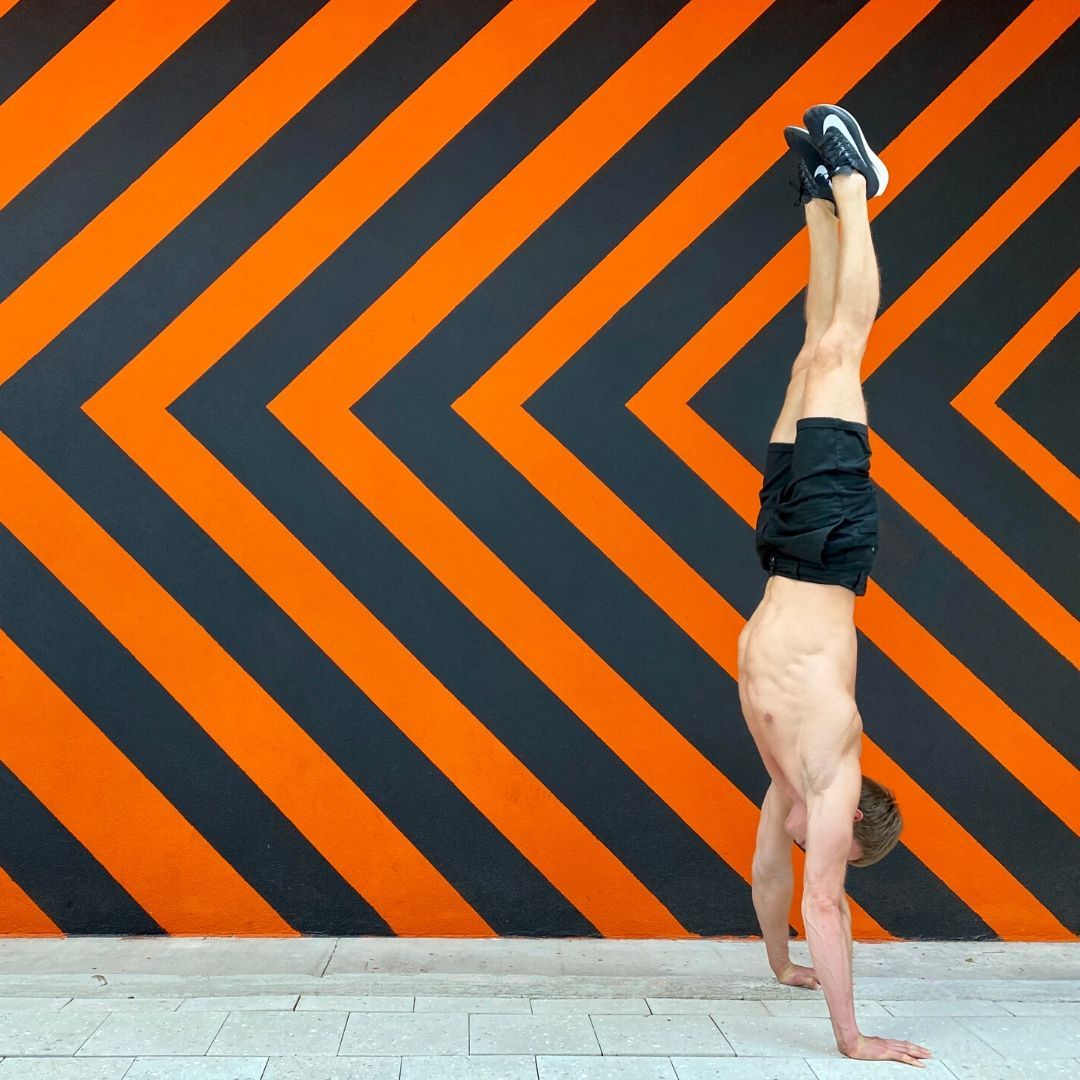
And the first thing I suggest focusing on is trying to reach the ceiling with your toes.
Given that request, the brain stretches the body into a straight line and eliminates all the angles automatically.
Ears in the Shoulders
Gravity will beckon and create angles wherever possible — don't give in.
During a handstand, the shoulder girdle should be as active as possible.
The whole structure rests on it.
Beginners often don't know how to remove the angle in the shoulders.
The hack: set a goal of touching your ears with your shoulders while keeping your eyes fixed on your hands.
Once this works, try to hold that position for 3 seconds, then gradually increase the time.
This secret helps with both balance and the visual beauty of the handstand.
Best exercises to build this: here and here.
Clamp Your Glutes
The glute muscles are the mediator between the body and the legs.
They're the main tool for making the body as solid as a stick.
From my experience: when I clamp my glutes, the whole body follows.
It was one of my coach's most frequent cues — and for good reason.
The Bottle Secret
Take a plastic bottle full of water with the cap open and try to crush it.
Now close the cap and try again.
The second time, the water presses against the walls from the inside, creating pressure that makes the bottle rigid and resistant.
Your body works the same way.
If you pull in your stomach and clamp your glutes — like screwing on the cap — you create intra-abdominal pressure that strengthens the whole structure.
Use this hack on your path to a perfect handstand.
How to Keep the Balance
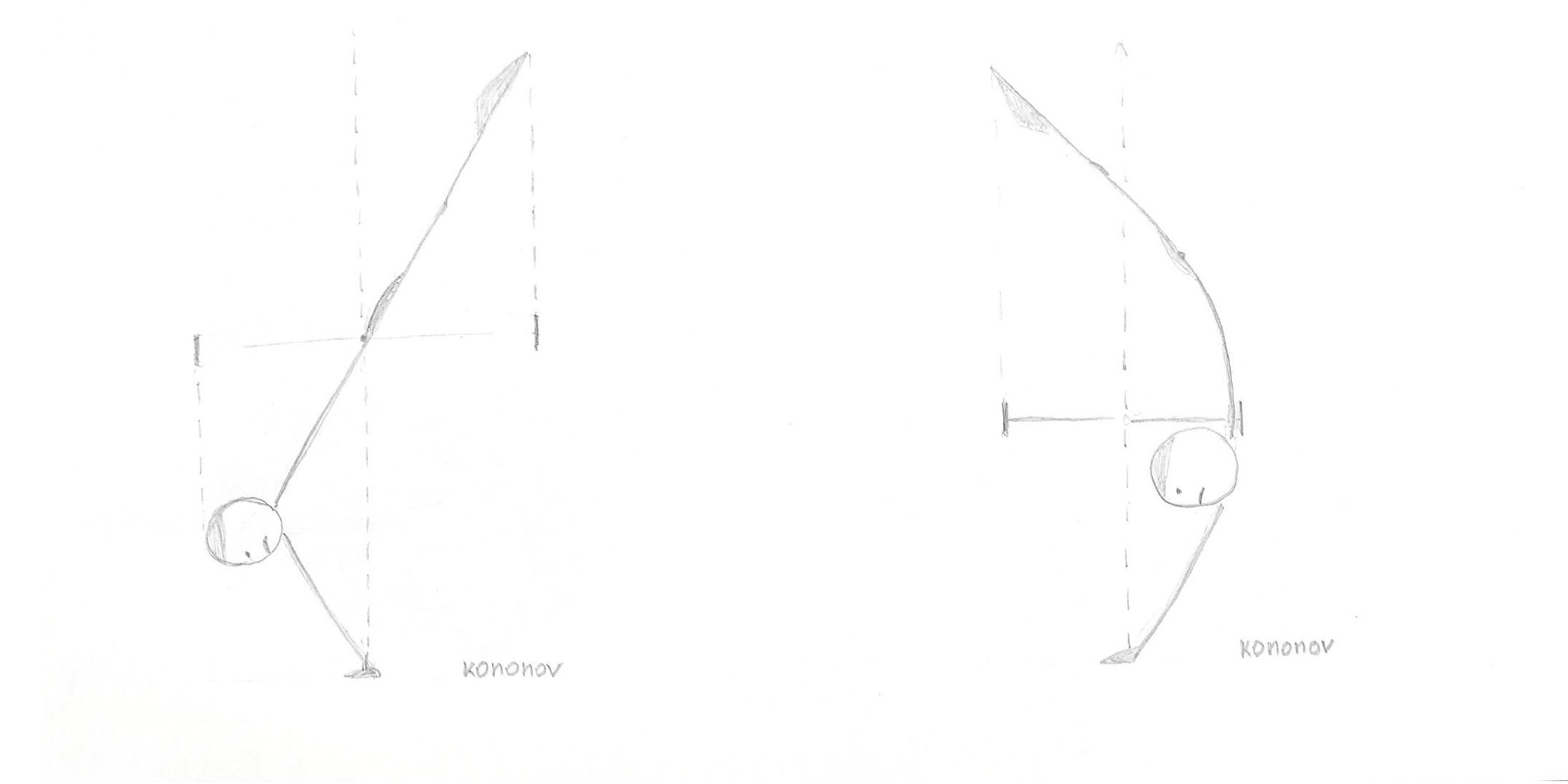
Essentially, a handstand is perfect balance.
The wrists are the center of the scales.
Ideally, keep your whole body above the center of the wrist.
If your toes start to fall: quickly create an angle in the shoulders, engage the deltas, and press back into the handstand.
Your inner sense will prompt you when this is happening.
If your toes go over your head: push your chest forward, engage your abdominals, and return to balance.
Balance is one of the most important skills to train — take the time and patience for it.
Find balance exercises here.
Remember: you can not only hold a handstand but also walk in it.
Losing your balance? Take a step.
Master the stance step by step.
Each new stage strengthens the muscles and builds self-confidence.
You can get over fear by looking at things through the eyes of a child.
Children are fearless — they enjoy every new activity.
I believe there is a child inside you too.
Lay pillows around, have fun, and enjoy the process.
If you found this useful, save it to your bookmarks and share it with friends interested in handstands.
And remember: if you have a body, you are already a gymnast.
Ready to put all of this into practice? Join the 21-Day Handstand Challenge — a step-by-step program designed to take you from zero to your first real hold.
FAQ
How long does it take to learn a handstand from scratch?
With consistent daily practice focused on building the base — core, shoulders, wrists — most people can achieve a freestanding handstand hold within 3–6 months. The timeline depends heavily on current strength and body awareness.
Why do my shoulders collapse in a handstand?
This usually means the shoulder girdle isn't actively engaged. The fix: focus on pushing the floor away and pulling your ears toward your shoulders. Practice overhead shoulder mobility exercises to build the range and strength needed.
Should I learn a handstand against the wall or freestanding?
Start against the wall to build strength and get comfortable being inverted. Once you can hold a wall handstand for 30+ seconds with good form, begin practicing short freestanding attempts. The wall is a tool, not a shortcut — freestanding balance is a separate skill you have to train directly.
What's the most common reason people fail at handstands?
Skipping the base work. Most people try to balance before they've built enough core strength, shoulder mobility, and wrist conditioning. A handstand is the top of a pyramid — if the foundation isn't solid, nothing holds.
Keep Reading
- How to Use Core for Handstand Balance — why core stability is the real foundation of every handstand
- Handstand Preparation: Strengthen Your Body, Shoulders, and Wrists — the essential prep work before you go upside down
- Master the Kick Up to Handstand — how to get off the ground with control
- 5 Essential Handstand Technique Tips — the details that make the difference between falling and flying
- The Power of Handstands: From Fear to Confidence — why the mental game matters as much as the physical